
Multimeter Uses: Key Functions Explained
The average multimeter can measure up to 20V in voltage levels. Yet many projects, especially in innovation and electronics, use less than 200mA of current. This fact underscores the critical role multimeters play in electrical testing and troubleshooting. Being confident in using a function digital multimeter matters for professionals and for students who are studying electrical principles.
Thanks to their versatility, multimeters provide precise measurements of voltage, current, and resistance. Here, we’ll explore the various ways a multimeter can be used. By the end, you should have the knowledge needed to use this important tool effectively in your electrical work.
Main Takeaways
- Multimeters are key instruments for measuring voltage, current, and resistance.
- Understanding multimeter applications is crucial for effective troubleshooting.
- Many users prefer digital multimeters due to their accurate and easy-to-read measurements.
- It is vital to follow safety precautions whenever you use a multimeter for electrical testing.
- Continuity testing is a key function for verifying electrical connections.
- Selecting the right multimeter can significantly impact your testing efficiency.
Getting Started With Multimeters
A multimeter is indispensable for diagnosing electrical problems and ensuring devices work correctly. It can measure several electrical properties, making it useful for both professionals and hobby users.
What is a Multimeter?
A multimeter is a combined instrument designed to measure voltage, current, and resistance. This greatly helps when tracking down electrical faults. You can get multimeters in analog or digital versions, and each type has its place. Analog models use a needle and scale for measurement, whereas digital ones show values on a display. You can use them to check wall receptacles, batteries, and various electronic components.
When it comes to electrical testing, the multimeter plays a central role. It helps verify circuit integrity and detect issues in many different environments. In the automotive sector, it is commonly used to measure battery voltages and sensor outputs. It also ensures industrial machinery operates smoothly, preventing expensive failures.
Multimeters, vital for testing, assess AC and DC voltage, current, and resistance. Because they handle so many tasks, they are invaluable for simple DIY work and more complex projects.
Multimeter Types Explained
Grasping the main multimeter types helps you carry out electrical testing more successfully. They fall into two main categories: analog and digital multimeters. Each offers distinct features and benefits. Your choice will depend on what you need to measure and how you like to work.
Understanding Analog Multimeters
Analog multimeters feature a needle pointer and dial display. They are superb for tracking fast-changing values. Their design lets users see changes as they happen. Analog devices boast a sensitivity range typically between 1,000 to 50,000 ohms per volt, with the peak sensitivity reaching up to 20,000 Ω/V. Because of this, they were widely used by radio technicians during the mid-20th century.
Understanding Digital Multimeters
Due to their precision and functionality, digital multimeters have become highly favored. They use LCD displays that provide clear numeric readings, often with up to four digits. You can measure a variety of parameters with them, including voltage and temperature. Advanced models also include features like auto-ranging, data logging, and wireless connectivity. This makes them perfect for complex jobs in fields like automotive diagnostics and renewable energy.
Comparing Analog And Digital Multimeters
Deciding whether to buy an analog or digital multimeter comes down to what you need and how much you want to spend. Below is a table showing the key ways they differ:
| Key Feature | Analog Multimeters | Digital Multimeters |
|---|---|---|
| Type Of Display | Moving needle on a dial | Numeric display (LCD) |
| Measurement Accuracy | Good, but less precise | High precision and resolution |
| Response To Changes | Quick response to changes | Response speed depends on sampling rate |
| Typical Uses | Ideal for viewing rapidly changing readings | Very versatile and used in many industries |
| Cost | Usually cheaper overall | Varies widely, but can be higher |
Both types are valuable for electrical testing, but digital multimeters have become more popular thanks to their precision and capabilities among hobbyists and professionals.
Main Components Of A Multimeter
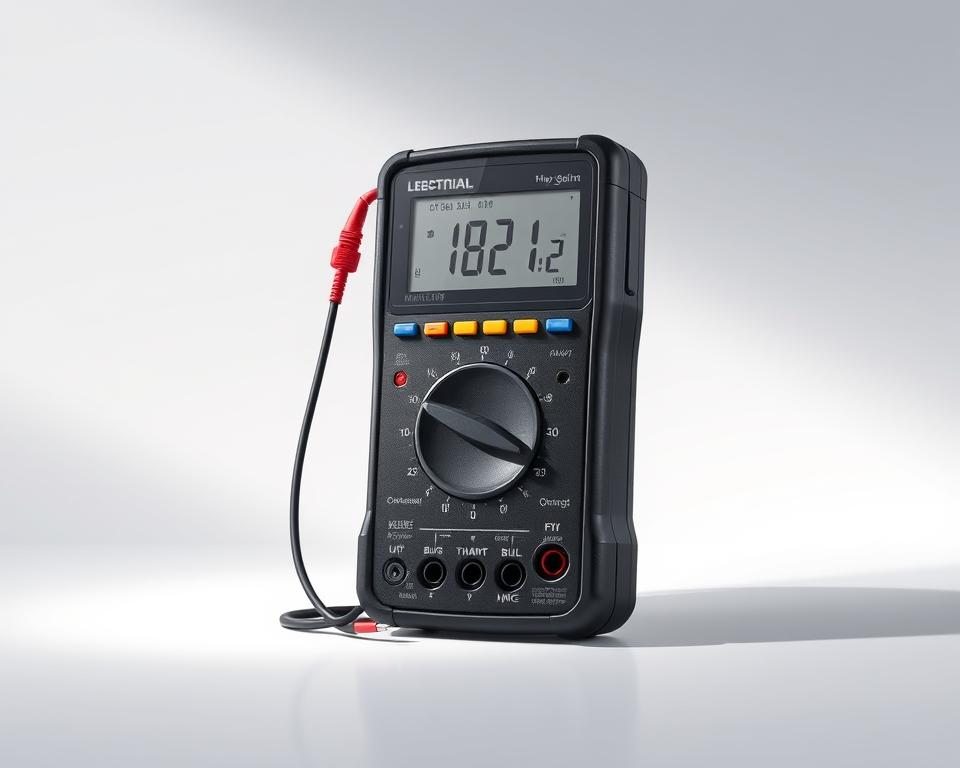
Grasping the key elements of a multimeter is vital for its effective use. It is made up of several core components, and each part has a specific job. You read values on the display, and use the selector knob to move between different functions such as voltage, current, and resistance. Probes connect the device to the circuit being tested, marking another crucial feature.
Key Parts And Their Roles
The main components of a multimeter can be grouped as follows:
- Display Panel: Shows real-time measurement readings, making them easy to interpret.
- Selection Knob: Allows you to select which type of measurement you want, such as voltage, current, or resistance.
- Ports: Most units have three ports, while some have four, to support multiple probe configurations.
- Test Probes: Vital for linking the multimeter to electric circuits, with red for positive and black for ground connections.
How Multimeter Probes Work
The probes are critical to the way a multimeter operates. They come in several forms, including standard pointed probes and alligator clip attachments. Typically, you use the red lead for measuring values and the black one as the ground reference. Using alligator clips simplifies tasks involving several components, improving measurement precision and efficiency.
How the Selection Knob Works
The selection knob is central to moving between the different features of the multimeter. By rotating the knob, you can choose AC or DC voltage, current measurement, or resistance testing. Selecting the correct setting is essential to obtain accurate readings. Users must exercise caution with the range setting to prevent device damage or inaccurate results.
If you work with electrical testing, understanding what a multimeter can do is essential. They supply key measurements that help you accurately evaluate components. By measuring voltage, current, and resistance, they become indispensable for both professional applications and home projects.
Measuring AC and DC Voltage
One of the primary roles of a multimeter is measuring AC and DC voltage. They can deliver precise readings and detect even small changes in voltage. This is essential for ensuring that electrical devices operate safely within their voltage limits.
Measuring Current Accurately
Another major use of a multimeter is assessing current flow in AC and DC circuits. This ensures components function safely and efficiently, which is crucial for tasks like automotive diagnostics and industrial maintenance.
Understanding Resistance Measurement
To check the condition of components such as resistors, you use the resistance measurement feature. They can measure resistance values up to several megaohms, making them very useful for checking circuit integrity and performing continuity checks.
Continuity Testing Features
Continuity testing is essential for troubleshooting. The meter uses beeping sounds or visual indicators to show whether a connection is present. By confirming proper connections, continuity testing makes troubleshooting quicker and more effective.
| Key Function | What It Does | Application |
|---|---|---|
| Measuring Voltage | Measures AC and DC voltage with high accuracy. | Evaluating power supply in devices. |
| Measuring Current | Measures how much current is flowing through a circuit. | Checking battery voltage and sensor functionality. |
| Resistance Measurement | Tests the functionality of circuit components. | Confirming that resistors, diodes, and similar parts stay within their specified tolerances. |
| Testing Continuity | Checks for electrical connections. | Locating breaks and faults in circuit wiring. |
Safe And Effective Multimeter Use
Knowing how to properly use a multimeter is essential when dealing with electrical systems. By following proper steps, you protect yourself and improve the accuracy of your measurements. When measuring voltage, current, or resistance, each step requires certain precautions.
Essential Safety Precautions
Learning safety precautions before using a multimeter is critical. Your multimeter should be rated for your work environment. Sadly, over 30% of electricians use inadequately rated tools, risking danger. To stay safe, you should verify the multimeter settings before you attach the test leads.
You should never touch live conductors, especially when checking current, as this can cause shock. Wearing suitable personal protective equipment (PPE) is a must for circuits over 50 volts.
How To Measure Voltage Step By Step
Voltage measurement requires careful attention to detail. First, select the appropriate range and mode on the multimeter, choosing AC or DC as needed. Then, plug the probes into the common port and the voltage measurement port. Then, connect the probes accurately to the circuit.
Seeing 0 volts when testing from ground to neutral might show a wiring problem, highlighting multimeter safety importance.
How To Measure Current Step By Step
Current measurement is more involved than voltage. You must interrupt the circuit flow where you want to measure, as the multimeter joins the circuit in series. Choose the appropriate range, marked in amps or milliamps. Securely connect the multimeter probes between the open points of the circuit.
Always observe the multimeter for visual warnings, like unsafe voltages over 30 volts, focusing on safety.
Steps for Testing Resistance
If you want a precise resistance reading, remove the component from the rest of the circuit. Switch the multimeter to resistance mode, then connect the probes to the component. A reading within the specified range indicates a good component, whereas a large deviation can suggest a defect. This safety consideration helps avoid multimeter damage and ensures correct electrical flow analysis.
Common Multimeter Applications
In both professional environments and home use, multimeters are indispensable for many tasks. They shine in troubleshooting electrical circuits, making them invaluable. These tools help you find faults and repair them, ensuring your systems function properly.
Troubleshooting Electrical Problems With A Multimeter
Multimeters are often used first when diagnosing an electrical issue. Professionals and hobbyists alike use them to identify where a fault is occurring. By measuring voltage, current, and resistance, they identify faulty parts, ensuring safe and efficient operation.
Testing Batteries and Power Sources
Multimeters are frequently used for checking the condition of batteries. By reading battery voltage, they help you know the charge level for car and household batteries. It enables you to see whether a battery is usable or should be replaced, supporting smarter energy use.
Checking Circuit Integrity
Checking circuit integrity is essential for both safety and performance. Multimeters assess this by measuring continuity and resistance. These tests can reveal broken wires or faulty connections, allowing timely repairs. In general, using a multimeter increases safety and simplifies the troubleshooting process.
How To Choose The Best Multimeter For You
Picking an appropriate multimeter helps you work more efficiently when testing circuits. Important factors include accuracy, available measurement functions, portability, and ease of use. Compared to analog meters, digital multimeters usually offer more functions, making them popular with both technicians and hobbyists.
Important Things To Look For
When choosing a multimeter, keep these key factors in mind:
- Accuracy: They often provide very fine resolution, with some units able to detect 1-millivolt changes.
- Measurement Ranges – Opt for models that handle various electrical metrics like voltage, current, and resistance.
- Portability – Pick a compact and lightweight model if you plan to use it in the field.
- Usability: Auto-ranging and backlit displays make for a better user experience.
Popular Models: Cen-Tech 7 Function Digital Multimeter
One well-known option is the Cen-Tech 7 Function Digital Multimeter, which combines versatility with a modest price. It brings together vital features appealing to both beginners and experts. It also provides auto-ranging, which simplifies taking measurements and speeds up your work.
This model’s count capacity hits up to 20,000, promising precise readings for a variety of electrical jobs. It excels in troubleshooting, automotive tests, and battery checks. This balance of features and ease of use makes the Cen-Tech 7 Function Digital Multimeter an attractive option to purchase.
Conclusion
Grasping multimeter functions is key for those engaged in electrical tasks. We’ve encapsulated multimeter roles, highlighting their importance in testing and safety. Their accurate readings of voltage, current, and resistance are extremely valuable. Therefore, multimeters are important tools for both professionals and hobbyists.
Multimeters go beyond mere measurements. Some units add advanced functions, including data logging and wireless communication. With these features, you can use multimeters in many areas, including vehicle diagnostics and renewable energy systems. Continuity and frequency testing functions further aid in locating faults so systems can run reliably.
Armed with this insight, individuals can adeptly use their multimeter proficiency for precise troubleshooting and enhancing safety measures. You can also improve the efficiency of electrical installations and maintenance work. Overall, the flexibility of multimeters makes them indispensable for achieving precise, reliable electrical results.
Common Questions
Which Functions Does A Multimeter Primarily Provide?
The main functions of a multimeter are measuring voltage (both AC and DC), current, and resistance. It also performs continuity tests. Together, these functions are crucial for diagnosing problems and assessing overall circuit condition.
How do I choose between an analog and a digital multimeter?
Deciding between analog and digital options comes down to your specific requirements. Analog types are great for showing swift changes in value. In contrast, digital models provide precise numeric readings. This makes them preferred for daily tasks.
Which Safety Precautions Are Important With A Multimeter?
When you use a multimeter, always choose the correct setting before you connect the probes. Never touch bare live conductors during current measurements. You should also disconnect components from the circuit before testing resistance to prevent false readings.
Is It Possible To Test Batteries With A Multimeter?
Absolutely, multimeters are often used to test batteries. They measure the battery’s voltage to indicate its charge level. That way, you can make sure your batteries are dependable for whatever you are powering.
What Is Continuity Testing And Why Is It Important?
With continuity testing, the multimeter checks whether a continuous electrical connection exists. It’s crucial for finding and fixing breaks. This process helps keep your electrical setups functioning as intended.
What are the typical components found in a multimeter?
A multimeter typically includes a reading display, a function selector knob, probe ports, and the probes. The probes are the parts that physically touch the circuit you are testing.
How Does The Cen-Tech 7 Function Digital Multimeter Compare To Other Options?
The Cen-Tech 7 Function Digital Multimeter is easy to use and offers versatile functions, including auto-ranging. Its affordable price makes it an attractive choice for both professionals and hobby users.